
Our story, from Moredon Road to Pinehurst
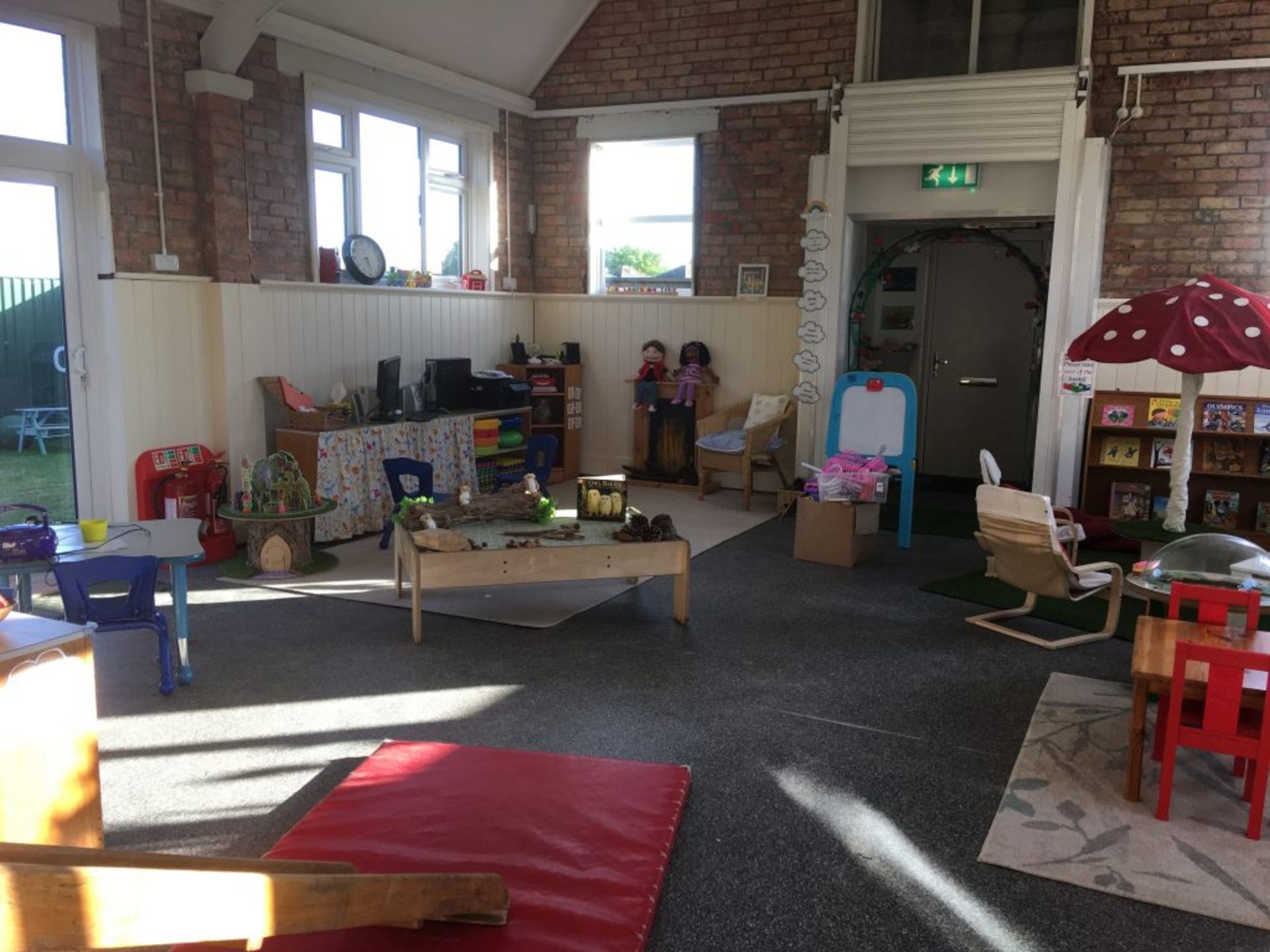
The pre-school was established in the 1960s and was originally located at St Andrew's Church on Moredon Road, Swindon. In September 2005 we moved to a mobile building in the grounds of Rodbourne Cheney Primary School, where we spent fourteen very happy years.
We left Rodbourne Cheney at the end of the summer term in 2019 and relocated to our lovely new premises at Pinehurst in September 2019. We also became a limited company, and are now called Learning Tree Pre-School (Swindon) Limited.
It has been a very exciting and busy time for us. Work at the premises is still ongoing and we have many plans for the future.
We have six permanent members of staff, some of whom relocated with Elaine, our manager and director. Elaine has worked at the group since 1983, after becoming involved through her own children, and became its owner in 1991. Ever since, she has devoted her full attention and passion to making the group the well-respected, professional school it is today.
What children learn with us
Children at Learning Tree have the opportunity to explore each of the seven areas of learning outlined in the EYFS, every session.
By the end of their time with us, we aim for all children to be confident learners and speakers, with a wide range of vocabulary that enables them to hold a conversation using sentences of four to six words.
We also aim for them to follow some of the Rainbow Rules and expectations, to be independent in meeting their own needs and making choices, to recognise familiar logos and their own name and write part or all of it with an awareness of letter sounds, and to count to five or more with a depth of understanding of what that quantity means.
Above all, we want children to have an awareness of other places and the wider world, embracing new experiences and rising to challenges.
How we choose what to offer the children
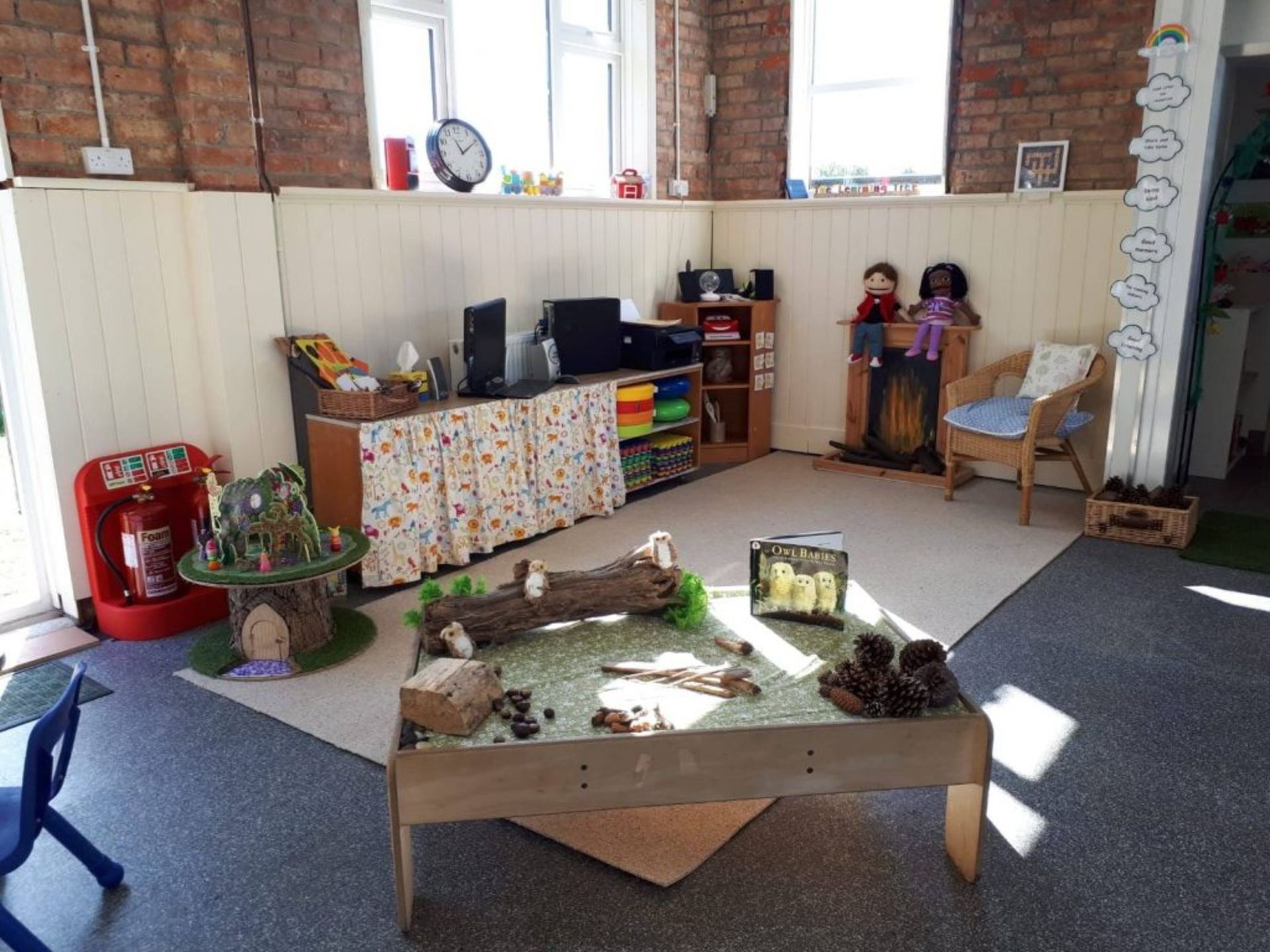
Basic continuous provision is the set of resources we put out each session. Indoors that means dough, construction, art, sensory play, the book corner, puzzles, mark making, small world, and musical instruments.
Outdoors there is the pebble area, sand, construction, large loose parts, a mud kitchen, chalk, books, mark-making equipment, crates and planks of wood.
Enhancements are what we add to that basic provision after observing the children's interests and where they need extra challenge and stimulation. Adult-led activities are based on our knowledge of our cohort, their interests and their developmental needs — twice-daily group times for all children with songs, stories and dancing, plus activities children can choose to join, such as baking, sewing and junk modelling.
Interventions are more specialised activities for particular children who have been identified as having an additional need in a particular area, for example children with SEND, or children who need encouragement around speaking.
How we work with children
Every minute we are with the children is an opportunity for them to learn, either from the environment we have created or from their interactions with the adults. Warm, kind, relaxed and respectful adults help children to settle quickly; feeling secure and supported, they are able to access the curriculum to its full advantage.
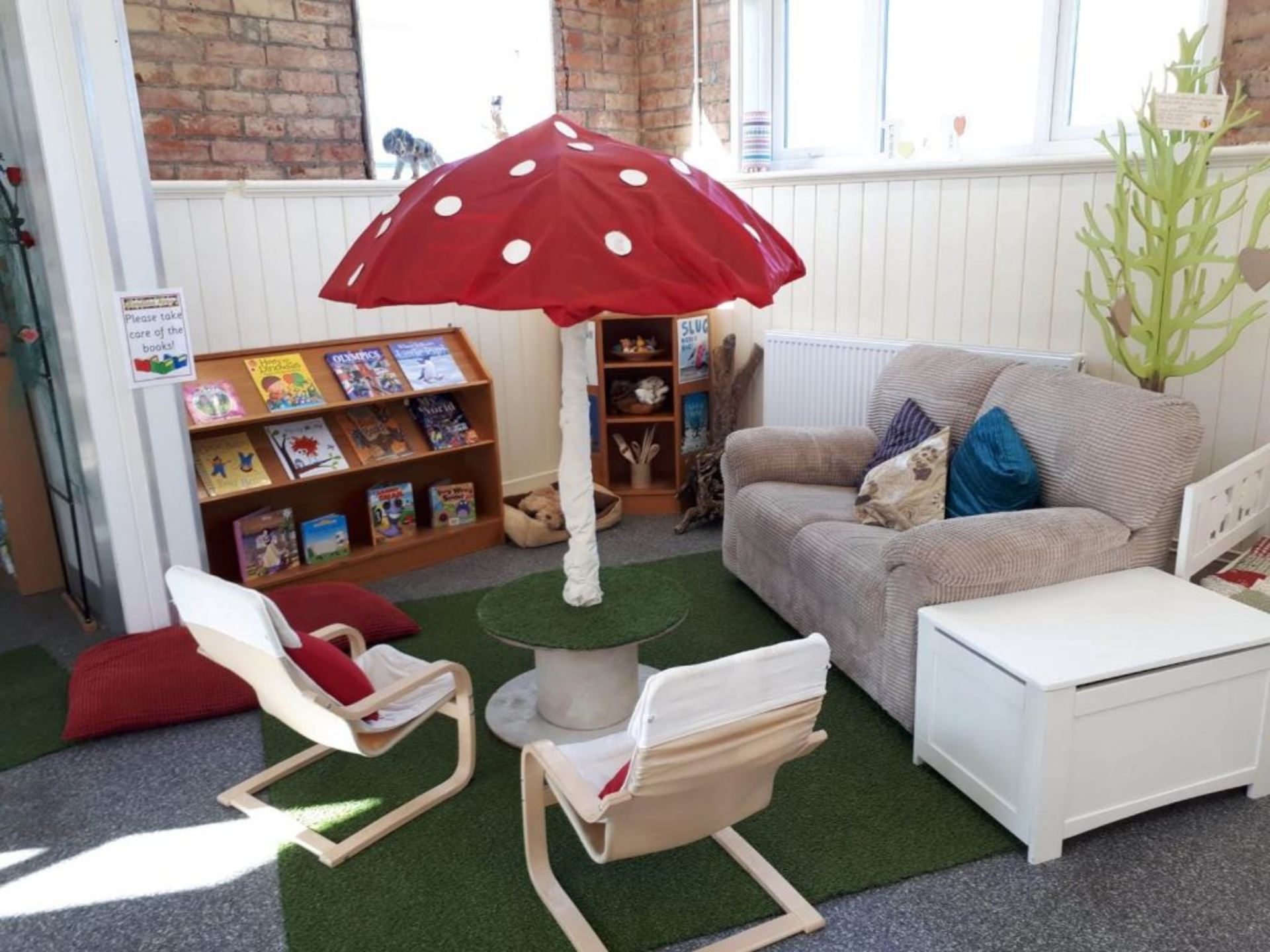
We have a generous learning environment, we offer choices, and we work in strong partnership with parents.
Free flow play allows children to become absorbed in their learning, helping them make the mental connections on which further learning is built. It helps them to be independent, curious and creative, and it promotes a calm atmosphere in the setting. Children have access to the outdoors throughout the session, so they can indulge their need to move, use gross motor movements, build their muscles and experience all-weather play.
In the Moment Planning means we can move children's learning on in a natural, child-led way. It gives us an in-depth overview of where they are developmentally and provides a strong line of communication with parents. Reflective practice means our teachers are constantly questioning their assumptions and thinking about what is best for the children.
- Open-ended resourcesLoose parts and open-ended materials promote imagination and creative thinking.
- Half-termly supervisionsA regular 'deep dive' into practice, key children and staff training needs.
- Induction and mentoringA comprehensive process for new staff, apprentices and staff returning after a break.
- Regular staff meetingsTime to discuss practice, provision and children's development.
- Briefings and rotasMorning briefings on key children, with staff on duty outside every morning and afternoon session.
Care, welfare and safeguarding
To provide a high standard of quality care for many years to come, by continually considering how best to create, maintain and improve the setting.
To safeguard and promote the welfare of the children in our care, by creating a setting which is welcoming, safe and stimulating, and to ensure that all children and families feel safe and valued.
Safeguarding children: Learning Tree Pre-school aims to create an environment which promotes and safeguards the welfare of children. We have a duty of care to refer any allegation, complaint or concern received relating to a child to Social Services or the police. A copy of our safeguarding children policy and procedure is always available in our folder.
OFSTED
Ofsted is the Office for Standards in Education, Children's Services and Skills. It is the government body that regulates and inspects services caring for children and young people, and education and skills for learners of all ages.
Every early years provider in England, including pre-schools, nurseries and childminders, must be registered with Ofsted and must meet the standards set out in the Early Years Foundation Stage. Inspectors visit settings to look at the quality of teaching and learning, how well children are developing, how children are kept safe, and how well the setting is led and managed.
After each inspection Ofsted publishes a report so that parents can read for themselves what inspectors found. You can read our reports on the Ofsted website at reports.ofsted.gov.uk/provider/16/EY428712
If you would like to talk through anything in a report, or anything about how we are inspected and regulated, please just ask a member of the team.